Moss Decor: Creating Calm Interiors with Preserved Greenery
Moss decor has become a quiet presence in interior design, offering a way to bring natural texture into living spaces without the upkeep of live plants. Preserved moss requires no soil, no daily watering, and no special lighting, which makes it a practical choice for anyone who wants greenery without the routine of plant care. Unlike dried moss, preserved moss retains its soft, springy feel and color for years, which is why it is increasingly used in wall panels, framed art, and tabletop arrangements.
The process of preserving moss involves replacing the natural moisture in the plant with a mixture of glycerin, water, and sometimes food-grade dye to maintain its hue. This stops the moss from decaying, so it stays in its fresh-looking state indefinitely. The result is a material that looks and feels alive but requires almost no maintenance. It does not grow, so it will not outgrow its frame or spread beyond its intended area. It does not attract insects, and it does not shed pollen, which makes it a good option for people with allergies. For these reasons, preserved moss has become a staple in projects where calm natural accents for rooms are the goal.
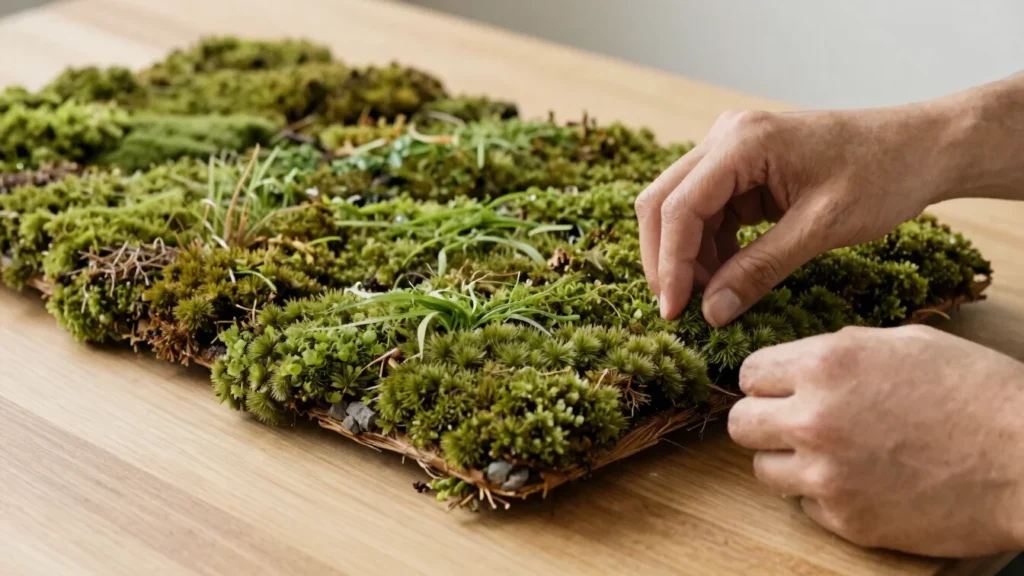
When selecting moss for interior use, the most common types are flat moss, reindeer moss, and pillow moss. Flat moss, often called sheet moss, grows low and dense, with a velvety surface that works well as a background for larger arrangements. Reindeer moss is actually a lichen, not a true moss, and it grows in tufts with a branching, coral-like structure. It is naturally lighter in color, often pale green or gray, and can be dyed in a range of shades. Pillow moss forms rounded, cushion-like clumps that add volume and depth. Each of these types has a different texture and color, and mixing them creates a more interesting composition than using a single kind.
One of the main concerns people have about preserved moss is how it will hold up over time. Because the preservation process replaces water with a stable glycerin solution, the moss stays flexible and does not become brittle. It will not crumble or turn to dust like dried moss can. The color will fade slowly if the moss is exposed to direct sunlight for long periods, but in indirect light, the color remains stable for several years. Dust can settle on the surface, especially if the moss is mounted on a wall or placed in a high-traffic area, but regular gentle cleaning with a soft brush or a hairdryer on a cool setting removes it without damaging the material.
How Moss Art Fits into a Calm Interior Scheme
Calm interiors are built on simplicity, restraint, and a connection to natural materials. Moss decor fits this approach because it introduces organic shape and color without adding visual clutter. A framed moss panel on a wall acts as a natural focal point, drawing the eye without overwhelming the space. The muted greens, soft grays, and earthy browns of preserved moss complement a neutral palette well, and they add warmth to rooms that might otherwise feel stark or clinical.
The texture of moss also plays a role in how a room feels. Smooth surfaces like painted drywall, glass, and polished metal can make a space feel clean but also cold. Adding a rough, fibrous element like moss introduces a tactile contrast that makes the room feel more inviting. This is one reason why moss art is often used in spas, meditation rooms, and wellness centers, where the goal is to create a sense of retreat and relaxation. At home, the same principle applies: a small moss arrangement in a bedroom or living area can shift the atmosphere from sterile to soothing.
In terms of placement, moss art works best in areas where it can be seen but not touched frequently. A framed piece above a console table, a moss-covered letter or logo on a shelf, or a small moss arrangement in a glass terrarium are all low-contact installations that will stay clean and intact. For larger installations, such as an entire moss wall, it is worth considering the humidity of the room. Preserved moss does best in moderate humidity, between 40 and 60 percent. In very dry air, the moss may become slightly stiff, though it will not lose its color. In very humid air, condensation can form on the surface, which over time may cause the glycerin to weep. A well-ventilated room with stable humidity is ideal.
Practical Considerations for Long-Lasting Moss Decor
Even though preserved moss requires no watering, it does need some attention if you want it to look good for years. The main maintenance tasks are dust removal and controlling the light and humidity. Dust removal is straightforward: use a soft paintbrush or a microfiber cloth to gently sweep the surface, or use a hairdryer on a cool, low setting to blow dust off. Do not use water or any cleaning spray, because moisture can break down the preservation solution over time.
Light is another factor. Preserved moss will fade in direct sunlight, so it is best placed in indirect light or under artificial lighting that does not emit UV rays. If the room gets strong sunlight for part of the day, consider a spot that is shaded during those hours. Color stability is generally excellent in low-light conditions, and many preserved moss products come with a warranty for color retention when kept out of direct sun.
When it comes to framing and mounting, the backing material matters. Moss is often glued onto a firm backing like plywood, acrylic, or a plastic grid. A sealed backing prevents moisture from the wall from seeping into the moss, and it also keeps the moss from transferring any glycerin to the wall surface. If you are making your own moss art, use a non-porous backing and a strong adhesive designed for porous materials. Hot glue works well for small pieces, but for larger areas, a construction adhesive is more reliable.

Using Moss Decor to Define Zones in an Open Plan
In open-plan homes, it can be hard to separate different areas without building walls or using bulky furniture. Moss art can act as a visual divider without blocking light or making the space feel smaller. A large moss panel hung between a living area and a dining area creates a distinct zone without cutting off the flow of the room. Because the moss is a natural material, it softens the transition between spaces and adds a layer of texture that defines each area.
The same approach works in commercial spaces like offices, where moss walls are used to create quiet corners or break out areas. The natural look of the moss helps reduce visual fatigue, which is common in environments with a lot of screens and hard surfaces. Studies have shown that even a brief view of greenery can reduce stress, and preserved moss offers that benefit without the need for natural light or watering. For this reason, calm natural accents for rooms are increasingly specified in office design briefs, and moss art is one of the most straightforward ways to deliver that effect.
Moss decor is not just for large installations. Small framed pieces, moss-covered magnets, and moss topiaries on a desk or shelf bring the same calming quality to a smaller scale. The key is to match the scale of the moss to the size of the room. A single small frame in a large room might look lost, while a giant wall panel in a tiny entryway could feel overwhelming. Proportion matters, and the best results come from considering the surrounding furniture, the wall color, and the amount of natural light.
Styling Moss with Other Natural Materials
Moss pairs naturally with wood, stone, and metal. A moss panel in a wood frame emphasizes the organic feel, while a metal frame gives it a more modern, industrial look. When combined with stone or concrete, the softness of the moss contrasts with the hard, cold surface, creating a balanced visual effect. This mix of materials is a hallmark of biophilic design, which aims to bring nature into built environments.
For a cohesive look, choose a color palette that includes greens, browns, grays, and whites. Moss in its natural green shades works well with warm wood tones, while dyed moss in blues or pinks can be used to accent a room with a more playful color scheme. The neutral palette of most preserved moss makes it easy to integrate into existing decor without needing to change anything else.
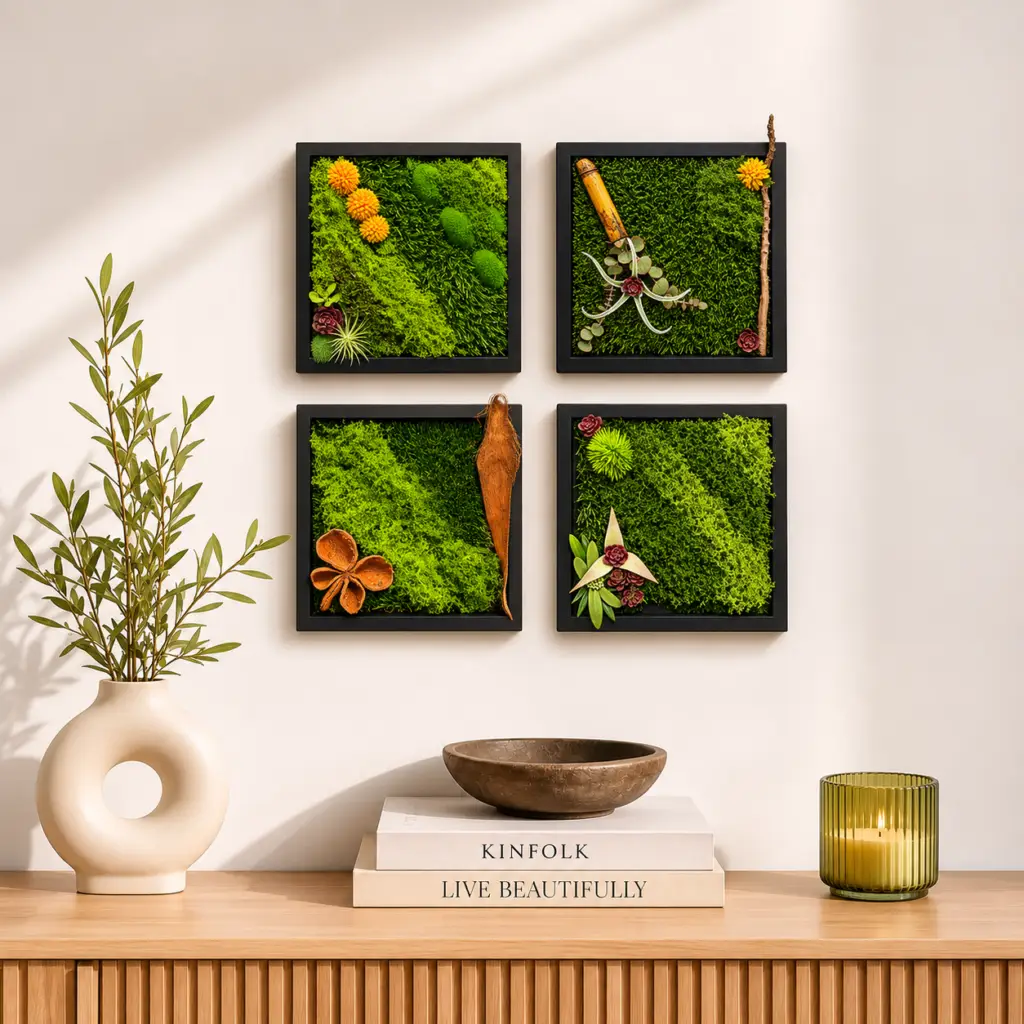
If you are planning a moss wall or a large framed piece, consider the overall composition before attaching anything. Lay out the moss pieces on a flat surface to see how the colors and textures interact. Flat moss works well as a background, while reindeer moss and pillow moss add height and dimension. A balanced arrangement will have a mix of low, flat areas and higher, textured areas, with no single type dominating the whole piece.
Moss decor is not a trend that will fade quickly. The materials are durable, the maintenance is minimal, and the visual effect is genuinely calming. For anyone looking to bring a natural, quiet element into their home or office, preserved moss offers a solution that is both practical and beautiful. The key is to choose good quality preserved moss, place it in the right light, and clean it gently when needed. With those basics in place, a moss piece can remain a source of visual calm for many years.